
Here are Top 10 corporate event games that are perfect for work parties:

Balloon Pop
- Objective: Pop balloons tied to other participants while protecting your own.
- How to Play: Each player ties a balloon to their ankle. The goal is to pop others’ balloons without getting yours popped.
- Why It Works: It’s a fun and energetic game that gets everyone moving and laughing.
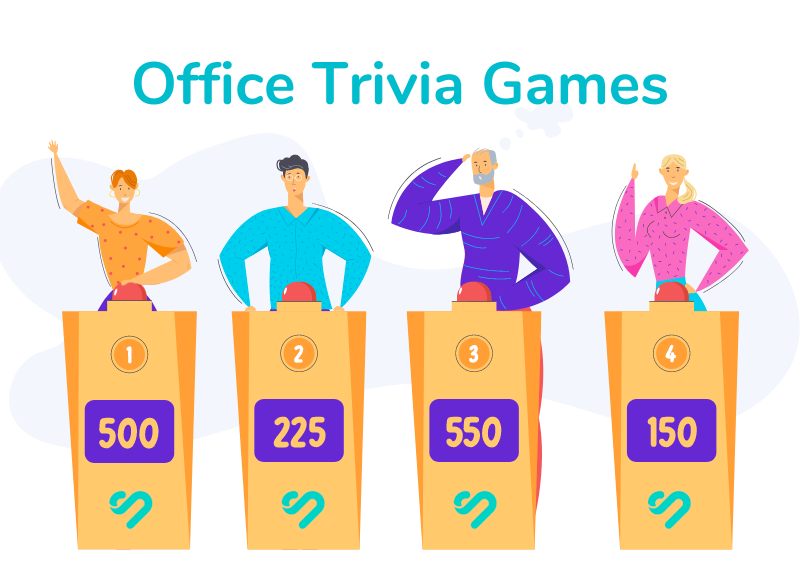
Office Trivia
- Objective: Test employees’ knowledge of company history, industry trends, or general trivia.
- How to Play: Divide participants into teams. Ask questions related to the company or general knowledge. Teams earn points for correct answers.
- Why It Works: It encourages team bonding and a friendly competitive spirit.
Office Trivia is a game designed to test employees’ knowledge about their workplace, colleagues, and the company they work for. It’s a fun and engaging way to encourage team bonding while also celebrating company culture. Here’s how it works:
How to Play Office Trivia:
- Preparation:
- Create a set of trivia questions related to the company. These could cover topics like the company’s history, key milestones, fun facts about the workplace, or even personal details about colleagues (with their permission).
- Categories:
- You can organize the questions into different categories, such as:
- Company History: “In what year was the company founded?”
- Colleague Fun Facts: “Which colleague once climbed Mount Kilimanjaro?”
- Policies and Procedures: “What is the company’s policy on remote work?”
- Product/Service Knowledge: “What is the name of our flagship product?”
- You can organize the questions into different categories, such as:
- Teams:
- Divide the participants into teams. This encourages collaboration and makes the game more interactive.
- Game Format:
- Choose a format for asking questions. This could be similar to a quiz show where you ask questions one at a time, or you could use a game board with different categories and point values, like in Jeopardy!.
- Scoring:
- Award points for correct answers. You can also add bonus rounds or tie-breaker questions if necessary.
- Prizes:
- Consider giving out small prizes or certificates to the winning team to add a competitive edge.
Example Questions for Office Trivia:
- “What is the name of the company’s CEO?”
- “Which department won the last office team-building competition?”
- “What is our company’s mission statement?”
- “How many employees work in the main office?”
Office Trivia is a great way to build camaraderie, enhance knowledge about the company, and inject some fun into a work party or corporate event.

Scavenger Hunt
- Objective: Engage employees in a fun and interactive activity that encourages teamwork.
- How to Play: Create a list of items or clues that participants need to find or solve. This can be within the office or around a specific venue.
- Why It Works: Promotes collaboration and problem-solving skills.
A Scavenger Hunt is a fun, interactive game where participants or teams are given a list of items to find, tasks to complete, or clues to follow. The goal is to complete the list as quickly as possible, often within a set time limit. Scavenger hunts can be tailored to suit a variety of themes, locations, and group sizes, making them a popular choice for corporate events, team-building activities, and social gatherings.
How to Organize a Scavenger Hunt:
- Planning:
- Determine the Location: Decide whether the hunt will take place within the office, around a larger event venue, or even in an outdoor setting like a park.
- Choose a Theme: Themed hunts can be more engaging. Themes could be related to holidays, company history, or even a specific project or goal.
- Create a List: Prepare a list of items to find or tasks to complete. The list might include physical objects, photos to take, or clues to solve.
- Types of Challenges:
- Find Items: Participants must locate specific objects, either hidden around the venue or naturally present (e.g., “Find a stapler from the HR department”).
- Complete Tasks: Teams may need to complete certain tasks, such as taking a selfie with a particular colleague, solving a riddle, or performing a short activity (e.g., “Get a coffee cup signed by the CEO”).
- Solve Clues: Teams might be given riddles or cryptic clues that lead them to the next item or location.
- Divide into Teams:
- Split participants into small teams. This fosters teamwork and friendly competition.
- Set a Time Limit:
- Give teams a set amount of time to complete as many items on the list as possible. This adds excitement and urgency to the hunt.
- Scoring:
- Points can be awarded for each item found or task completed. Some items or tasks might be worth more points if they are more challenging.
- Bonus points can be awarded for creativity or speed.
- Prizes:
- Offer small prizes or recognition to the team that scores the highest. Prizes could range from gift cards to fun office perks like a casual dress day.
Example Scavenger Hunt Items/Tasks:
- “Find a pen with the company logo.”
- “Take a photo with the tallest person in the office.”
- “Collect a business card from someone in the marketing department.”
- “Solve this riddle to find the next item: ‘I speak without a mouth and hear without ears. I have no body, but I come alive with the wind.'”
Benefits of a Scavenger Hunt:
- Team Building: Encourages collaboration and communication among participants.
- Engagement: Adds an element of fun and adventure to the event.
- Exploration: Helps employees explore and become more familiar with their work environment or the event venue.
A Scavenger Hunt is a versatile and enjoyable activity that can be adapted to fit any corporate event, making it a great way to energize participants and foster teamwork.

Minute to Win It
- Objective: Complete simple but challenging tasks within a minute.
- How to Play: Set up different stations with timed challenges, like stacking cups or balancing pencils.
- Why It Works: Quick-paced and fun, it keeps energy levels high and encourages participation from everyone.
Minute to Win It is a fast-paced, high-energy game format where participants are challenged to complete simple, often quirky tasks within 60 seconds. The challenges are designed to be fun and sometimes humorous, using common household or office items. This game is perfect for corporate events, team-building activities, or any gathering where you want to add excitement and laughter.
How to Play Minute to Win It:
- Preparation:
- Choose the Challenges: Select a series of games or tasks that participants will attempt to complete in under a minute. The challenges should be easy to set up and use readily available items.
- Gather Supplies: Make sure you have all the materials needed for each challenge, such as cups, rubber bands, ping pong balls, or pencils.
- Setting Up:
- Designate a Play Area: Set up stations for each challenge. You can have multiple stations running simultaneously or rotate participants through each challenge.
- Assign Teams or Play Individually: Participants can compete individually or in teams, depending on the size of the group and the number of challenges.
- Game Rules:
- Time Limit: Each participant or team has one minute to complete the assigned task.
- Scoring: Points are awarded based on whether the task is completed successfully within the time limit. You can also award points based on performance (e.g., how many items are stacked or caught).
- Elimination or Cumulative Scoring: Decide if players who fail are eliminated after each round, or if all players continue with cumulative scoring to determine the winner.
- Prizes:
- Offer small prizes for the winning individual or team to add an extra incentive.
Example Minute to Win It Challenges:
- Stack Attack:
- Objective: Stack 36 plastic cups into a perfect pyramid and then back down into a single stack within a minute.
- Junk in the Trunk:
- Objective: Participants strap a tissue box filled with ping pong balls to their waist (using a belt or string). They must shake their hips to get all the balls out without using their hands.
- Cookie Face:
- Objective: Place a cookie on the participant’s forehead. They must move the cookie to their mouth using only facial muscles, without using their hands.
- Defying Gravity:
- Objective: Keep three balloons in the air for one minute, only using one hand.
- Penny Tower:
- Objective: Stack as many pennies as possible into a tower using only one hand within one minute.
- Spoon Frog:
- Objective: Participants use a spoon to catapult small objects (like marshmallows or ping pong balls) into a container a few feet away.
- Cup Flip:
- Objective: Flip a plastic cup from the edge of a table so it lands upside down on another cup within a minute.
- Nose Dive:
- Objective: Using only their nose, participants must move cotton balls from one bowl to another, using petroleum jelly on their nose to pick up the cotton balls.
- Paper Dragon:
- Objective: Unroll two rolls of streamers (one in each hand) completely within a minute.
- Egg Roll:
- Objective: Using only a spoon, participants must roll an egg across the floor and into a designated area.
Benefits of Minute to Win It:
- Team Building: Encourages participants to work together, cheer each other on, and develop a sense of camaraderie.
- Engagement: The quick, exciting nature of the games keeps everyone involved and entertained.
- Low Cost: Most challenges require minimal supplies, making it an inexpensive option for corporate events.
Minute to Win It is an adaptable and entertaining game format that can bring energy and laughter to any corporate event or work party.
Karaoke Competition
- Objective: Showcase singing talents in a relaxed and fun environment.
- How to Play: Set up a karaoke machine and let employees sing their favorite songs. You can even have a judging panel.
- Why It Works: Breaks the ice and creates a relaxed atmosphere where employees can let loose.
A Karaoke Competition is a lively and entertaining event where participants perform songs by singing along to instrumental tracks, often in front of an audience of colleagues or friends. This activity is perfect for work parties, corporate events, or team-building exercises, as it allows employees to showcase their talents, break the ice, and have fun together.
How to Organize a Karaoke Competition:
- Setup:
- Venue: Choose a suitable venue with enough space for a stage or performance area, as well as seating for the audience.
- Equipment: You’ll need a karaoke machine or a sound system with microphones, speakers, and a screen to display the lyrics. Many karaoke machines also come with a wide selection of songs to choose from.
- Song Selection: Provide a diverse song list covering various genres and decades, so participants can pick something they’re comfortable with.
- Participants:
- Sign-Up: Encourage employees to sign up in advance or on the spot. Participation should be voluntary to ensure everyone is comfortable.
- Solo or Group Performances: Allow participants to perform solo or in groups, depending on their comfort level. Group performances can help those who might be shy to get involved.
- Judging:
- Judging Panel: Select a few judges, possibly from the management team or among the employees, to score the performances. Alternatively, you can let the audience vote.
- Criteria: Judges can score based on criteria such as vocal ability, stage presence, creativity, and overall entertainment value. You might also include fun categories like “Best Dressed” or “Most Enthusiastic.”
- Prizes:
- Offer prizes for different categories, such as “Best Performance,” “Most Entertaining,” or “Crowd Favorite.” Prizes can range from small trophies or certificates to gift cards or fun office perks.
- Engagement:
- Encourage Audience Participation: Get the audience involved by encouraging them to clap, cheer, and even sing along. You could also have a segment where the audience gets to choose the songs for the next round.
- Theme: Consider adding a theme to the competition, like 80s hits, movie soundtracks, or holiday songs, to make it more interesting.
- Wrap-Up:
- Final Performance: End the competition with a grand finale, such as a group performance involving all participants or the judges.
- Announce Winners: Announce the winners and distribute prizes. Consider giving out participation awards or fun titles (like “Karaoke King/Queen”) to make everyone feel appreciated.
Benefits of a Karaoke Competition:
- Ice Breaker: Helps employees relax and bond in a fun, informal setting.
- Boosts Morale: Encourages creativity, self-expression, and can significantly boost office morale.
- Inclusive: Allows employees of all skill levels to participate and have fun, with the focus on enjoyment rather than competition.
A Karaoke Competition is an excellent way to bring people together, encourage team spirit, and create lasting memories at any corporate event or work party.
:max_bytes(150000):strip_icc()/GettyImages-468838793-5980bfa99abed50010e55485.jpg)
Two Truths and a Lie
- Objective: Get to know colleagues better through a fun guessing game.
- How to Play: Each participant states two truths and one lie about themselves. The rest of the group guesses which is the lie.
- Why It Works: Helps break down barriers and fosters a deeper understanding between colleagues.
Two Truths and a Lie is a popular icebreaker game often used at work parties, corporate events, and team-building activities. The game helps participants get to know each other better in a fun and relaxed way. It’s easy to play, requires no special equipment, and can be a great way to start conversations and build connections among team members.
How to Play Two Truths and a Lie:
- Objective:
- Each participant will share three statements about themselves—two of which are true and one that is a lie. The goal is for the other players to guess which statement is the lie.
- Game Setup:
- Group Size: This game works well with small to medium-sized groups. It can be played with the whole group or within smaller teams if the group is large.
- Seating Arrangement: Participants can sit or stand in a circle or around a table, so everyone can see and hear each other.
- Instructions:
- Sharing Statements: Each participant takes a turn. When it’s their turn, they share three statements about themselves—two true and one false. They can be in any order.
- Guessing: After the person shares their three statements, the other participants try to guess which statement is the lie. They can discuss among themselves or take turns guessing.
- Revealing the Lie: Once everyone has made their guesses, the person reveals which statement was the lie. This often leads to interesting stories or explanations behind the truths and the lie.
- Example Statements:
- Participant 1:
- “I have climbed Mount Everest.”
- “I have a black belt in karate.”
- “I speak four languages fluently.”
- Participant 2:
- “I once met a famous movie star.”
- “I have never flown on an airplane.”
- “I have a twin brother.”
(The other participants would then guess which statement they think is false.)
- Participant 1:
- Variations:
- Themed Statements: You can make the game more challenging or relevant by having participants share statements related to work, hobbies, travel, or a specific theme.
- Scoring: You can keep score by awarding points to participants who correctly identify the lie. The person with the most points at the end of the game wins.
- Tips for Playing:
- Make It Interesting: Encourage participants to come up with creative or surprising truths and lies. The more unexpected, the better.
- Respect Boundaries: Remind participants to share only what they’re comfortable revealing, and to keep the game light-hearted and fun.
- Benefits of Two Truths and a Lie:
- Icebreaker: Helps break the ice and gets people talking, especially in groups where not everyone knows each other well.
- Team Bonding: Encourages participants to learn fun and interesting facts about each other, building stronger connections.
- Low Pressure: The game is easy to play and doesn’t require any special skills, making it accessible to everyone.
Two Truths and a Lie is a versatile and engaging game that’s perfect for warming up a group, fostering camaraderie, and creating an enjoyable atmosphere at any work event or corporate gathering.

Escape Room Challenge
- Objective: Solve puzzles and riddles to “escape” a locked room within a time limit.
- How to Play: Either hire a company that sets up escape rooms or create your own version with puzzles and clues.
- Why It Works: Enhances problem-solving, teamwork, and time management skills.
An Escape Room Challenge is a thrilling, immersive team-building activity where participants are “locked” in a room and must solve a series of puzzles and riddles to “escape” within a set time limit. This game fosters teamwork, problem-solving, and communication, making it an excellent choice for corporate events and work parties.
How to Organize an Escape Room Challenge:
- Preparation:
- Theme and Storyline: Choose a theme for the escape room that aligns with the event or the participants’ interests. Common themes include mystery, adventure, science fiction, or a historical scenario. Create a storyline that explains why the participants need to escape, such as defusing a bomb, escaping from a haunted house, or solving a crime.
- Puzzles and Riddles: Design a series of puzzles, riddles, and challenges that participants must solve to progress. These can range from finding hidden objects, decoding ciphers, solving logic puzzles, assembling pieces of a larger puzzle, or even interacting with physical objects in the room.
- Props and Decorations: Decorate the room according to the theme to create an immersive experience. Use props, lighting, and sound effects to enhance the atmosphere and make the challenge more engaging.
- Setup:
- Room Layout: Arrange the room so that clues and puzzles are hidden or placed in specific locations. Ensure that the room has a logical flow, guiding participants from one puzzle to the next.
- Locks and Keys: Use locks (combination, key, or digital) that must be opened by solving puzzles. The solutions to some puzzles may provide the combination or key to unlock the next step.
- Timers: Set up a visible timer (e.g., on a screen or using a countdown clock) to add urgency and excitement. The standard time limit is usually 60 minutes, but this can be adjusted based on the complexity of the room.
- Gameplay:
- Divide into Teams: Split participants into small teams, typically 4-6 people per team, depending on the size of the room and the number of puzzles.
- Introduction: Brief the teams on the rules, the storyline, and the objective. Explain that they need to work together to solve the puzzles and escape before time runs out.
- Game Master: Assign a game master who monitors the game, provides hints if the teams get stuck, and ensures the safety of the participants. The game master can communicate with the teams via a walkie-talkie, intercom, or written notes.
- Hints and Clues:
- Hint System: Decide on a system for providing hints if teams struggle with a particular puzzle. Some escape rooms allow a set number of hints, while others may provide hints at the game master’s discretion.
- Clue Placement: Place clues around the room that gradually reveal the solution to the final puzzle, leading to the escape.
- Endgame:
- Escape or Time Out: The game ends when a team successfully escapes the room or when the time runs out. If time expires, the game master can walk the team through the remaining puzzles to show how they could have escaped.
- Debriefing: After the challenge, gather the teams to discuss the experience. Share insights on what worked well, the importance of teamwork, and highlight any particularly clever solutions or funny moments.
- Prizes:
- Offer small prizes to the team that escapes first or completes the most puzzles. Prizes could include gift cards, trophies, or themed items related to the escape room.
Benefits of an Escape Room Challenge:
- Team Building: Promotes collaboration, communication, and problem-solving, strengthening team dynamics.
- Engagement: The immersive nature of the game keeps participants highly engaged and motivated.
- Fun and Memorable: Provides a unique and memorable experience that participants are likely to talk about long after the event.
An Escape Room Challenge is an exciting way to bring colleagues together, encourage creative thinking, and create a shared experience that fosters teamwork and camaraderie. Whether designed in-house or hosted at a professional escape room venue, it’s sure to be a hit at any corporate event.
Lip Sync Battle
- Objective: Perform lip-sync renditions of popular songs.
- How to Play: Employees select songs, rehearse, and then perform. A panel of judges or the audience votes for the best performance.
- Why It Works: It’s a light-hearted way to encourage creativity and bring out employees’ fun sides.
A Lip Sync Battle is a lively and entertaining competition where participants perform a song by lip-syncing to the music, often adding their own flair with dance moves, costumes, and props. It’s a fun and engaging activity that’s perfect for work parties, corporate events, or team-building exercises, allowing employees to showcase their creativity and sense of humor.
How to Organize a Lip Sync Battle:
- Preparation:
- Song Selection: Participants choose a song to perform. Encourage a wide variety of genres and time periods, from pop hits to classic anthems. Participants can pick a song that resonates with them or one that they think will entertain the audience.
- Performance Planning: Encourage participants to plan their performances, considering choreography, costumes, and props. They can rehearse in advance to perfect their routine.
- Setup:
- Venue: Arrange a space with a stage or performance area, complete with good lighting and sound equipment. Ensure there’s enough room for the performers to move around and for the audience to watch comfortably.
- Sound System: Prepare a sound system with the selected songs queued up. You may also want to have someone available to manage the music during performances.
- Participants:
- Sign-Up: Encourage voluntary sign-up in advance, so participants have time to prepare. You can also allow spontaneous sign-ups on the day of the event.
- Solo or Group Performances: Allow participants to perform individually or in groups. Group performances can add an extra layer of fun, with coordinated choreography and themes.
- Judging:
- Judging Panel: Select a panel of judges, possibly from the management team or a mix of employees, to score the performances. Alternatively, you can have the audience vote for their favorites.
- Criteria: Performances can be judged on creativity, stage presence, lip-sync accuracy, and entertainment value. Fun categories like “Best Costume” or “Most Energetic Performance” can add more excitement.
- Performance:
- Performance Order: Decide the order in which participants will perform, either randomly or by drawing names. Announce each performer and their chosen song before they take the stage.
- Engagement: Encourage audience participation by cheering, clapping, and maybe even singing along. The more the audience is engaged, the more fun the event becomes.
- Prizes:
- Offer prizes for the best performances. Categories might include “Best Lip Sync,” “Best Choreography,” “Best Costume,” and “Crowd Favorite.” Prizes can be small trophies, certificates, gift cards, or fun office perks.
- Wrap-Up:
- Finale: End the battle with a group performance or a lip sync-off between the top contenders.
- Announce Winners: Announce the winners and distribute prizes. Consider recognizing all participants with small tokens of appreciation for their efforts.
Benefits of a Lip Sync Battle:
- Ice Breaker: Helps break down barriers and encourages participants to let loose and have fun.
- Boosts Morale: Brings humor and light-hearted competition to the workplace, boosting employee morale.
- Encourages Creativity: Allows employees to express their creativity and showcase hidden talents.
- Inclusive: Provides an opportunity for everyone to participate, regardless of singing ability, making it accessible to all.
A Lip Sync Battle is a fun and dynamic way to energize a corporate event, fostering camaraderie and creating lasting memories. It’s sure to leave participants and the audience laughing, cheering, and talking about the performances long after the event is over.

Human Knot
- Objective: Untangle a human knot without breaking the chain.
- How to Play: Participants stand in a circle, grab hands with others (not next to them), and then work together to untangle without letting go.
- Why It Works: Great for team-building, as it requires communication and cooperation.
The Human Knot is a classic team-building game that challenges participants to work together to untangle themselves from a physical “knot” without letting go of each other’s hands. It’s a great icebreaker that encourages communication, problem-solving, and cooperation, making it a perfect activity for work parties, corporate events, or team-building exercises.
How to Play the Human Knot:
- Group Size:
- Best played with groups of 6 to 12 people. If you have a large group, divide participants into smaller teams to play simultaneously.
- Instructions:
- Form a Circle: Have all participants stand in a circle, shoulder to shoulder.
- Create the Knot:
- Participants extend their right hands into the center of the circle and grab someone else’s right hand.
- Next, participants extend their left hands into the center and grab a different person’s left hand.
- Check the Knot: Once everyone is holding hands, ensure that each participant is holding hands with two different people and that they’re not holding hands with someone directly next to them.
- Untangling the Knot:
- Objective: The group must work together to untangle themselves into a single circle without letting go of anyone’s hands.
- Rules:
- Participants can step over or under linked arms, twist, and turn, but they cannot let go of hands.
- If the group finds themselves in an impossible knot, they can agree to start over, but the challenge is to untangle without releasing hands.
- Communication: Encourage participants to talk to each other, suggest moves, and coordinate their actions to find the best way to untangle.
- Time Limit (Optional):
- You can set a time limit (e.g., 10-15 minutes) to add a sense of urgency and challenge. If multiple groups are playing, the first group to successfully untangle wins.
- Debriefing:
- After the game, gather the participants to discuss what strategies worked, what challenges they faced, and how they overcame them. This can lead to valuable insights into teamwork and problem-solving.
Benefits of the Human Knot:
- Teamwork: Encourages participants to work together, listen to each other, and communicate effectively to achieve a common goal.
- Problem-Solving: Challenges participants to think critically and creatively to figure out how to untangle themselves.
- Icebreaker: Helps break down barriers and fosters a sense of camaraderie and trust among participants.
- Physical Activity: Involves light physical activity, which can be a fun way to energize the group.
Variations:
- Blindfolded Knot: For an added challenge, blindfold some or all participants, forcing them to rely on verbal communication even more.
- Silent Knot: Participants must untangle the knot without speaking, relying entirely on non-verbal communication.
- Large Group Knot: If you have a large group, create multiple knots and have the teams race to untangle their knots first.
The Human Knot is an engaging and interactive game that effectively brings people together, helping them develop collaboration skills while having fun. It’s a simple yet powerful way to build stronger teams and foster a positive work environment.
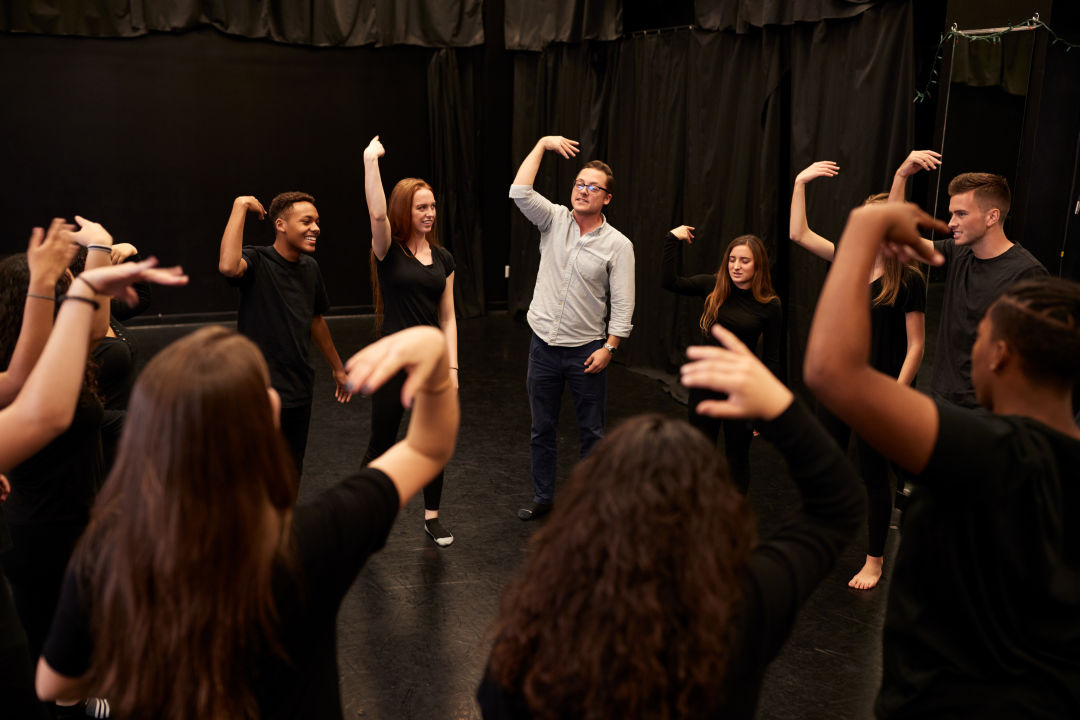
Improv Workshop
- Objective: Participate in improvised skits or scenarios.
- How to Play: An instructor can lead or participants can volunteer for improvised acting scenes.
- Why It Works: Enhances creativity, quick thinking, and boosts confidence.
An Improv Workshop is a fun and interactive activity designed to enhance creativity, quick thinking, and communication skills through improvisational exercises. This type of workshop is ideal for corporate events, work parties, and team-building sessions, as it encourages participants to think on their feet, collaborate with others, and step out of their comfort zones in a supportive environment.
How to Organize an Improv Workshop:
- Preparation:
- Facilitator: Hire a professional improv coach or designate someone with experience in improvisational theater to lead the workshop. A skilled facilitator can guide the group, introduce exercises, and create a comfortable atmosphere.
- Space: Arrange a spacious, open area where participants can move freely. Chairs can be set up in a circle or semicircle to create a welcoming environment.
- Group Size: Improv exercises work best with small to medium-sized groups (10-20 people). For larger groups, consider dividing participants into smaller teams.
- Workshop Structure:
- Warm-Up Exercises: Start with light and fun warm-up exercises to help participants relax and get into the right mindset. These exercises often involve simple games or activities that encourage spontaneity and loosen up the group.
- Basic Improv Principles: Introduce the fundamental principles of improv, such as “Yes, and…” (accepting and building on others’ ideas), active listening, and being present in the moment. These principles will guide participants throughout the exercises.
- Improv Games and Activities: Lead the group through a series of improv games and exercises designed to build confidence, creativity, and teamwork. These can range from simple word games to more complex scene work.
- Popular Improv Games:
- Yes, And…: Participants take turns adding to a story or idea, each starting their sentence with “Yes, and…” to build on what the previous person said.
- One-Word Story: The group creates a story together, with each participant contributing one word at a time. This game emphasizes collaboration and active listening.
- Freeze: Two participants start an improvised scene. At any point, someone from the audience can shout “Freeze!” and take the place of one actor, starting a new scene based on their physical position.
- Scenes from a Hat: Participants draw scene ideas from a hat and must improvise a short scene based on the prompt. This game encourages quick thinking and creativity.
- Emotional Rollercoaster: Participants improvise a scene, and the facilitator periodically calls out different emotions (e.g., happy, angry, sad), which the actors must immediately adopt and incorporate into the scene.
- Feedback and Debrief:
- Positive Reinforcement: After each exercise, provide positive feedback and highlight what participants did well. Encourage them to reflect on their experiences and share what they learned.
- Group Discussion: Discuss how the skills practiced in improv (e.g., adaptability, active listening, collaboration) can be applied in the workplace. This helps participants connect the workshop to their everyday roles.
- Final Performance (Optional):
- Showcase: If participants are comfortable, conclude the workshop with a final performance where they can showcase what they’ve learned. This could be a series of short improv scenes or a group game performed in front of the rest of the participants.
Benefits of an Improv Workshop:
- Enhanced Communication: Improv requires participants to listen carefully and respond thoughtfully, improving overall communication skills.
- Creativity Boost: Encourages thinking outside the box and generating new ideas, which can be valuable in problem-solving and innovation at work.
- Team Building: Fosters collaboration and trust among team members, as they must rely on each other to create successful scenes.
- Confidence Building: Helps participants gain confidence in speaking and presenting, as they learn to trust their instincts and embrace spontaneity.
- Stress Relief: Provides a fun and light-hearted break from work, reducing stress and boosting morale.
Tips for a Successful Improv Workshop:
- Encourage Participation: Make sure everyone feels included and comfortable, but also remind participants that it’s okay to step out if they feel uncomfortable.
- Keep It Light: Improv is about having fun and experimenting. Emphasize that there are no wrong answers, and mistakes are part of the learning process.
- Adapt to the Group: Tailor the exercises to the group’s energy level and experience. If the group is more reserved, start with simpler, low-pressure activities.
An Improv Workshop is a dynamic and enjoyable way to bring people together, improve essential workplace skills, and create a memorable experience for everyone involved.